

Bringing a rescue dog home can be exciting, but it is important to remember that adoption is a major change for the dog. A new home means unfamiliar people, new sounds, different routines, new smells, and a completely different environment.
Some rescue dogs seem comfortable almost immediately. Others may hide, sleep more than expected, become nervous, or need considerable time before showing their full personality.
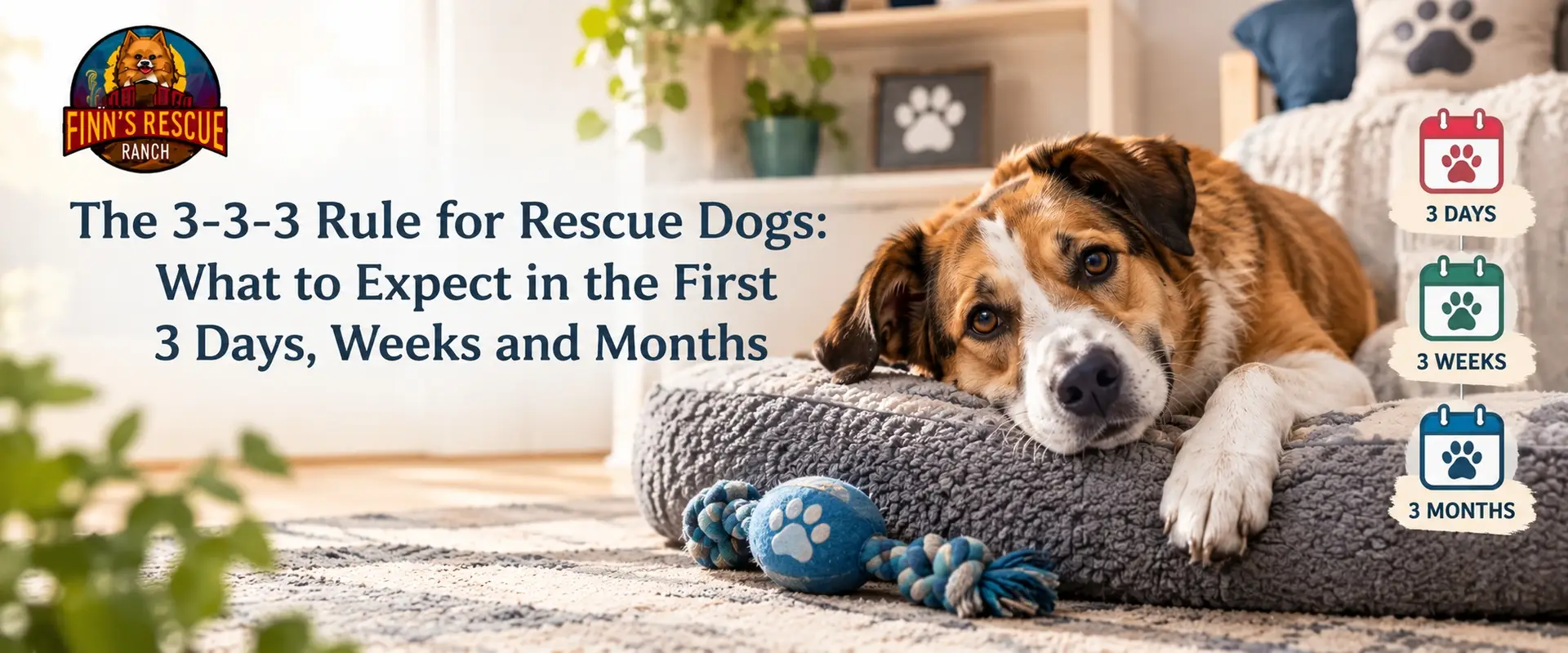
This is where the 3-3-3 rule for rescue dogs can be helpful. The framework gives adopters a simple way to understand the adjustment process: the first three days, the first three weeks, and the first three months.
It is not a strict schedule. Every rescue dog is different, and some dogs may adjust faster while others need considerably more time. The 3-3-3 rule is best used as a general guide for setting realistic expectations and giving a newly adopted dog the patience it needs.
What Is the 3-3-3 Rule for Rescue Dogs?

The 3-3-3 rule describes three broad stages that a rescue dog may experience after entering a new home:
- First 3 days: The dog may feel overwhelmed, nervous, tired, or uncertain.
- First 3 weeks: The dog may begin understanding the household routine and showing more of its personality.
- First 3 months: The dog may become more comfortable, develop stronger bonds, and settle into a consistent routine.
These stages are not guarantees. A dog’s age, history, temperament, health, previous living conditions, training, and individual personality can all affect how quickly it adjusts.
The most important idea is simple: do not expect a rescue dog to understand its new life immediately.
Why the 3-3-3 Rule Matters
One of the biggest challenges after adoption is knowing what behavior is normal during the adjustment period.
An adopter may expect a friendly dog to immediately explore the house, play with toys, interact with everyone, and sleep comfortably. Instead, the dog may hide, avoid eye contact, have accidents, seem unusually quiet, or appear unsure.
That does not necessarily mean the adoption is going badly.
The dog may simply be processing a major environmental change.
Understanding the adjustment process can help adopters avoid making quick judgments and can encourage them to provide the consistency and patience their new companion needs.
The First 3 Days: Decompression and Getting Comfortable
The first few days are often about helping the dog feel safe.
A rescue dog has just experienced a significant transition. Even if the dog came from a foster home, moving into a permanent home introduces new sights, sounds, people, and expectations.
During this stage, some dogs may:
- Sleep more than usual
- Stay quiet or hide
- Follow their new owner everywhere
- Avoid interaction
- Seem nervous around household sounds
- Have changes in appetite
- Need frequent bathroom breaks
- Appear unusually energetic or restless
- Be unsure about toys, food, or new surroundings
These behaviors can vary widely.
Keep the First Days Calm
Avoid overwhelming your new dog with visitors, crowded outings, or too many new experiences.
Give the dog a comfortable place to rest and allow it to explore at its own pace.
Before adoption day, it helps to prepare your home for a rescue dog by creating a safe area, removing potential hazards, preparing basic supplies, and deciding on household routines.
Do Not Force Interaction
If the dog wants to rest, let it rest.
If it is nervous about approaching someone, give it space. Positive interactions should be encouraged rather than forced.
The goal during the first few days is not to teach everything at once. It is to establish safety and predictability.
The First 3 Weeks: Learning the Routine
After several weeks, many rescue dogs begin to understand that the new home is becoming their regular environment.
The dog may start recognizing meal times, walks, bathroom routines, household sounds, and the people around it.
You may also begin to see more of the dog’s personality.
A quiet dog may become playful. A nervous dog may become more curious. A dog that initially stayed close to one person may begin interacting with other family members.
This is also a good time to introduce appropriate training and household expectations consistently.
Establish Consistent Rules
Everyone in the household should understand the basic rules.
For example, if the dog is not allowed in a particular room, the household should consistently follow that rule.
Consistency helps dogs understand what is expected.
Start Positive Training
Training does not need to be complicated.
Simple skills such as responding to its name, walking appropriately on a leash, settling down, and following basic cues can help establish communication.
Keep sessions appropriate for the individual dog and use positive reinforcement to encourage desirable behavior.
The First 3 Months: Building Trust and Routine
By around three months, many dogs may feel significantly more comfortable in their new surroundings.
This is often when owners notice a stronger bond developing and a clearer understanding of the dog’s personality, preferences, and habits.
The dog may have established regular sleeping and eating patterns, become familiar with the household routine, and developed greater confidence.
However, this does not mean every rescue dog will be fully settled at three months.
Some dogs need much longer.
Progress Is Not Always Linear
A rescue dog can appear comfortable for several weeks and then show new behaviors after becoming more confident.
This can happen because the dog is gradually relaxing and feeling secure enough to express behaviors that were not obvious at first.
Do not assume that every new behavior means something has gone wrong.
Instead, continue observing the dog, maintain consistency, and seek appropriate professional or veterinary guidance if a concern persists.
What Can Affect a Rescue Dog’s Adjustment?
There is no universal timeline because every dog has a different background.
Factors that may influence adjustment include:
Age
A puppy, adult dog, and senior dog can have very different needs and energy levels.
Previous Experiences
A dog’s previous environment and experiences may affect how it responds to new people, places, sounds, or routines.
Temperament
Some dogs are naturally confident and adaptable, while others are more cautious.
Health
Pain, illness, or other health concerns can influence behavior and energy levels.
Household Environment
A quiet home may feel very different from a busy household with children, visitors, and other pets.
Existing Pets
Introducing a rescue dog into a home with another dog or cat can add another layer to the adjustment process.
This is why adopters should focus on the individual dog rather than comparing its progress with another rescue.
How to Help a Rescue Dog Adjust
The best support is usually simple and consistent.
Provide regular meals, bathroom breaks, exercise, rest, training, and positive interaction.
Give the dog a predictable routine and a safe place where it can retreat when it needs quiet time.
Avoid overwhelming it with too many new experiences at once.
Pay attention to body language. If the dog appears uncomfortable, create more distance and reduce the pressure.
Most importantly, allow trust to develop naturally.
Responsible ownership involves more than providing food and shelter. It also means understanding the dog’s needs and responding appropriately as those needs change. You can learn more about this in responsible dog ownership.
The 3-3-3 Rule for Foster Dogs
The same general concept can be useful when fostering a dog.
A foster dog may also need time to decompress, learn the household routine, and become comfortable with new people and surroundings.
However, foster situations can be different because the dog may eventually move to another home.
Foster caregivers should therefore communicate important observations about behavior, routines, preferences, and challenges to the rescue organization.
If you are considering fostering, remember that the goal is not necessarily to make the dog completely settled in a few days. It is to provide a safe and supportive environment while helping the dog become more prepared for its next stage.
How to Know if Your Rescue Dog Is Making Progress
Progress does not always mean learning commands quickly.
Look for smaller signs of comfort, such as:
- Relaxing while resting
- Eating normally
- Exploring more of the home
- Seeking affection voluntarily
- Showing interest in toys
- Responding to familiar routines
- Sleeping comfortably
- Becoming more curious
- Recovering more quickly after something startles them
Every dog has a different personality.
Some dogs show progress through increased confidence, while others become calmer and less reactive.
Common Mistakes During the 3-3-3 Period
Expecting the Dog to Adjust Immediately
The first few days can be unpredictable. Give the dog time instead of expecting instant comfort.
Introducing Too Much Too Soon
Too many visitors, outings, new people, or unfamiliar situations can make adjustment harder.
Changing the Routine Constantly
Predictability can help a rescue dog understand its new environment.
Punishing Fear or Anxiety
Fear is not bad behavior. If a dog is nervous, identify what is causing the discomfort and reduce the pressure rather than punishing the response.
Comparing Dogs
One rescue dog may settle in within days, while another may need months. Neither timeline is automatically wrong.
Ignoring Health Concerns
Not every behavior change is simply an adjustment issue. Persistent changes in appetite, energy, bathroom habits, or physical condition should be discussed with a veterinarian.
How to Make the 3-3-3 Transition Easier
Preparation can make the adjustment period smoother.
Before bringing your dog home, make sure basic supplies are ready and household members understand the plan.
An adoption checklist can help you organize practical preparations before the dog arrives.
It is also useful to understand the adoption process beforehand so that you can focus on your dog once the transition begins.
If you are still deciding which dog may be right for your household, consider factors such as energy level, temperament, household environment, children, and other pets. The process of choosing the right rescue dog for your family can help you think about compatibility before adoption.
Benefits of Understanding the 3-3-3 Rule
The biggest benefit is having realistic expectations.
Instead of interpreting every nervous behavior as a problem, adopters can recognize that adjustment takes time.
The framework can also encourage patience and consistency.
For families adopting a rescue dog for the first time, this can make the transition less stressful and help them focus on gradual progress rather than immediate perfection.
It also reinforces an important part of rescue adoption: the relationship develops over time.
Finn’s Rescue Ranch’s adoption success stories, such as Harry’s miraculous journey, can provide a reminder that every rescue dog’s story and path forward can be different.
The 3-3-3 rule for rescue dogs is a general guideline describing three stages of adjustment: the first 3 days are often about decompression and feeling safe, the first 3 weeks are about learning routines and becoming more comfortable, and the first 3 months are about building trust and settling into life at home. Every dog is different, so the timeline can be shorter or much longer.
Frequently Asked Questions
1. What is the 3-3-3 rule for rescue dogs?
The 3-3-3 rule is a general adjustment guideline suggesting that rescue dogs may need around three days to decompress, three weeks to begin understanding their routine, and three months to become more settled and build stronger trust.
2. What should I expect during the first 3 days with a rescue dog?
Your dog may be tired, nervous, quiet, uncertain, or unusually clingy. Some dogs may hide or have changes in appetite. Keep the environment calm, provide a safe place to rest, and avoid overwhelming the dog.
3. What happens during the first three weeks?
Many dogs begin learning household routines and showing more of their personality during this period. Training can become more consistent, and the dog may become more comfortable with family members and its surroundings.
4. Does every rescue dog follow the 3-3-3 rule exactly?
No. The 3-3-3 rule is a guideline, not a guaranteed timeline. Some dogs adjust faster, while others may need considerably more time because of their age, temperament, health, history, or environment.
5. How can I help my rescue dog settle in?
Provide a predictable routine, a safe resting space, appropriate exercise, positive training, mental enrichment, and plenty of patience. Avoid overwhelming the dog with too many new experiences at once.
6. What if my rescue dog is still struggling after three months?
Adjustment can take longer than three months. Continue providing consistency and monitor your dog’s behavior and health. If you have ongoing concerns, speak with your veterinarian or a qualified behavior professional for appropriate guidance.
Conclusion
The 3-3-3 rule for rescue dogs can be a useful way to understand the transition from adoption day to a more settled home life. The first few days may be about safety and decompression. The following weeks can bring more familiarity and routine, while the months that follow may allow trust and confidence to grow.
But there is no perfect timeline.
The most important thing an adopter can provide is patience, consistency, safety, and understanding. Give your rescue dog the time it needs rather than expecting it to adjust according to a fixed schedule.
With the right support, what begins as an uncertain transition can gradually become a comfortable and rewarding relationship.
Finn’s Rescue Ranch is committed to helping rescued dogs move toward safe, caring, and permanent homes while supporting adoption and foster opportunities.