

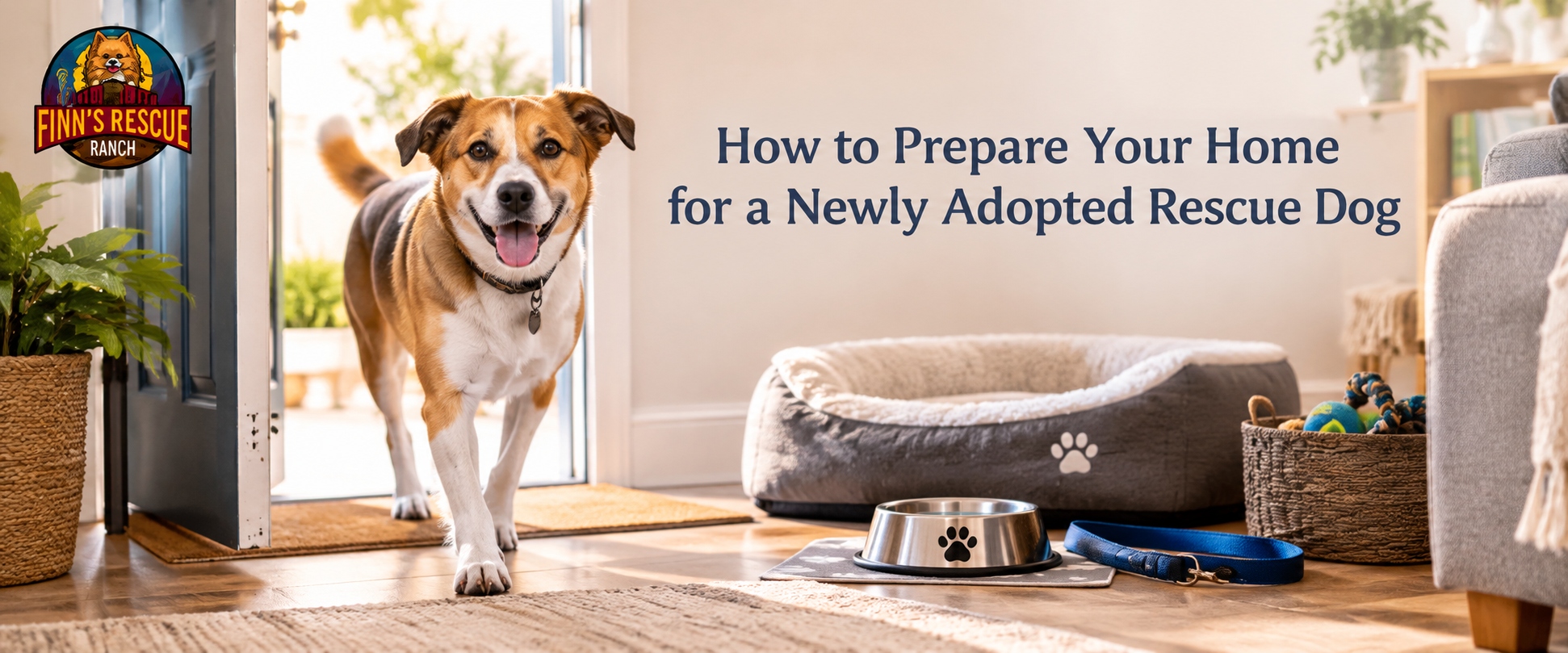
Bringing a rescue dog home is an exciting step, but the first few days can also feel unfamiliar for both you and your new companion. A dog entering a new home may be adjusting to different surroundings, people, sounds, routines, and expectations all at once.
Preparing your home before adoption day can make that transition much easier. You do not need a perfect house or an expensive collection of supplies. What matters most is creating a safe, predictable environment where your rescue dog can rest, learn the household routine, and gradually build trust.
Whether you are adopting your first dog or adding another companion to your family, a little preparation can help everyone start on the right foot.
Why Preparing Your Home Matters
A rescue dog may need time to understand that its new environment is safe. Even a friendly and confident dog can become nervous when familiar surroundings suddenly change.
Before your dog arrives, think about safety, comfort, routine, and household expectations. Decide where the dog will sleep, where food and water will be kept, and which areas of the home will be accessible.
It is also helpful for everyone in the household to agree on basic rules. If one person allows the dog on the sofa while another consistently prevents it, the dog may receive mixed signals.
Preparation creates consistency. That consistency can help a newly adopted dog understand what to expect.
Create a Safe Space
One of the first things to prepare is a quiet area where your rescue dog can relax without constant interruption.
This could be a corner of a room, a designated bed, or another comfortable area away from heavy household traffic. Place bedding, fresh water, and a few suitable enrichment items nearby.
The space should feel like a place the dog can retreat to when it needs rest. Avoid forcing interaction when the dog is there.
A safe space can be especially useful during the first few days, when ordinary household sounds and activities may feel overwhelming.
Prepare the Essential Supplies
You do not need to buy everything at once, but several basic items should be ready before your dog arrives.
Consider preparing:
- Food and water bowls
- Appropriate dog food
- Collar and identification
- A secure leash
- Comfortable bedding
- Suitable toys or enrichment items
- Cleaning supplies
- Waste bags
- Grooming essentials appropriate for the dog
- A crate or gate if it fits your household and the dog’s needs
If you already know the dog’s current food, keeping the diet consistent initially may help avoid unnecessary changes while the dog is settling in.
The exact supplies will depend on the dog’s age, size, temperament, health needs, and lifestyle.
Dog-Proof Your Home
Dogs are naturally curious, particularly when exploring an unfamiliar environment. Before bringing your rescue dog home, look around the house from the dog’s perspective.
Secure items that could be chewed, swallowed, knocked over, or otherwise cause harm. Keep medications, household chemicals, food that may be unsafe for dogs, and small objects out of reach.
Check doors, gates, windows, fencing, and other potential escape routes. This is particularly important during the first days because a newly adopted dog may not yet understand where home is.
If there are areas that should remain off-limits, use doors, gates, or other appropriate barriers rather than relying entirely on verbal commands.
Think About Children and Other Pets
If children live in the home, explain before arrival that the new dog needs time and space to adjust. Children should learn not to chase, corner, pull, or disturb the dog while it is eating or resting.
Supervised and calm interactions can help children and dogs become comfortable with each other.
The same principle applies when introducing a rescue dog to existing pets. Do not assume that animals will immediately become comfortable together. Introductions should be thoughtful and appropriate to the individual animals involved.
Understanding the dog’s known temperament and social behavior before adoption can also help you prepare your household. Families considering adoption may benefit from reviewing guidance on how to choose the right rescue dog for your family before making a match.
Establish a Simple Routine
Dogs generally benefit from predictable routines. Before adoption day, think about when meals, bathroom breaks, walks, rest, training, and play will happen.
Your routine does not have to be rigid. The goal is simply to give your dog a general idea of what happens throughout the day.
During the first days, keep things relatively calm. Avoid filling the schedule with visitors, trips, and unfamiliar experiences. Your new companion has enough to process just by learning the household.
A predictable routine can also help you notice changes in appetite, energy, bathroom habits, and behavior.
What Are Your Options for the First Few Days?
There is no single approach that works for every rescue dog. Your plan should reflect the individual dog’s temperament, history, age, energy level, and needs.
A Quiet Introduction
For a nervous or uncertain dog, a quiet introduction may be appropriate. Keep the environment calm, limit unnecessary visitors, and allow the dog to explore at its own pace.
A Structured Routine
Some dogs benefit from a straightforward routine involving regular meals, bathroom breaks, walks, rest, and positive training. Structure can help them understand what to expect.
Gradual Access to the Home
Instead of immediately giving a newly adopted dog access to every room, some families choose to introduce areas gradually. This can make supervision easier and reduce the number of unfamiliar things the dog has to process at once.
The right approach depends on the individual dog rather than a universal timeline.
How to Choose the Right Home Setup
Your home does not need to have a huge yard to be suitable for a rescue dog. What matters is whether the environment and daily routine can realistically support that dog’s needs.
Consider:
- How much space is available?
- Is the home secure?
- How much exercise can you provide?
- How long will the dog regularly be alone?
- Are children or other pets present?
- Where will the dog sleep?
- Can you provide training and mental enrichment?
- Are there areas that need to remain restricted?
For example, a high-energy dog may require a different daily routine from a calmer adult dog. A dog accustomed to living with children may have different household considerations from one that needs quieter surroundings.
The goal is not to create a perfect home. It is to create a home that fits the individual rescue dog’s needs.
Benefits of Preparing Before Adoption Day
Preparing your home in advance has several practical benefits.
First, it allows you to focus on the dog rather than searching for supplies after arrival. Second, it gives your household time to agree on expectations. Third, it reduces potential safety risks.
Most importantly, preparation can create a calmer beginning.
Adoption is a long-term commitment, and the transition does not end when the dog walks through the front door. Training, veterinary care, exercise, enrichment, and patience continue to matter as the relationship develops.
If you are still preparing for adoption, a rescue dog adoption checklist can help you organize the practical steps before bringing your new companion home.
Common Mistakes to Avoid
One common mistake is expecting an adopted dog to settle immediately. Some dogs become comfortable quickly, while others need considerably more time.
Another mistake is overwhelming the dog with too many new experiences. A stream of visitors, unfamiliar places, and constant attention may adjust harder.
Avoid changing every household rule from day to day. Dogs learn through consistency, so everyone should follow the same basic expectations.
It is also important not to judge a dog’s personality entirely by its first few days. Stress and unfamiliar surroundings can influence behavior.
Finally, do not ignore ongoing challenges. If a behavioral, training, or health concern appears, seek appropriate professional or veterinary guidance.
Tips for a Smoother Start
Keep the first days simple and predictable. Give your dog opportunities to rest and explore without unnecessary pressure.
Use positive reinforcement when the dog displays desirable behavior. Keep training sessions appropriate for the individual dog and focus on building communication rather than demanding perfection.
Maintain regular meals, bathroom breaks, exercise, and rest. Pay attention to how your dog responds to different people, sounds, environments, and activities.
Most importantly, give the relationship time to develop. A rescue dog may need patience before it fully understands its new surroundings and begins to show its personality.
To prepare your home for a rescue dog, create a quiet resting area, remove potential hazards, prepare essential supplies, secure doors and gates, establish simple household rules, and plan a predictable daily routine. Introduce children, pets, visitors, and new experiences gradually while giving the dog time to adjust.
Frequently Asked Questions
1. What should I do before bringing a rescue dog home?
Prepare a safe resting area, food and water bowls, bedding, a leash and identification, appropriate enrichment items, cleaning supplies, and a basic daily routine. Dog-proof the home and make sure everyone understands the household rules.
2. How long does it take a rescue dog to settle into a new home?
There is no fixed timeline. Some dogs adjust quickly, while others need several weeks or longer. Age, temperament, previous experiences, and the new environment can all influence the adjustment period.
3. Should I let my new rescue dog explore the entire house?
Not necessarily. Some families find that gradually introducing different areas makes supervision and adjustment easier. The best approach depends on the individual dog’s confidence, behavior, and household environment.
4. How can I help my rescue dog feel safe?
Provide a quiet place to rest, maintain predictable routines, use positive reinforcement, and avoid forcing interaction. Give the dog time to become comfortable with new people, sounds, pets, and surroundings.
5. How should I introduce a rescue dog to children?
Keep early interactions calm and supervised. Teach children to respect the dog’s personal space and avoid disturbing the dog while it is eating or resting. Allow the relationship to develop gradually.
6. What supplies does a newly adopted dog need?
Basic supplies include food and water bowls, appropriate food, bedding, a collar and identification, a secure leash, suitable enrichment items, and cleaning supplies. Additional items depend on the dog’s individual needs and your home.
Conclusion
Preparing your home for a rescue dog is less about buying everything possible and more about creating a safe, calm, and consistent environment. A secure space, predictable routine, appropriate supplies, and patient approach can make the transition easier for both the dog and the family.
Every rescue dog is an individual, so allow its personality and needs to guide your approach. With thoughtful preparation and a willingness to give the relationship time, the first days at home can become the foundation for a lasting companionship.
Finn’s Rescue Ranch supports responsible rescue and adoption by helping families approach the process thoughtfully and focus on creating stable, caring homes for dogs.